


 362 / 392

cooling (
∆
t
8/5
≥
400 s) smaller portion of ferrite is already present in the predominantly
bainitic microstructure of CGHAZ. All is reflected in the Vickers hardness of formed
microstructure (numbers in circles). Maximum hardness of martensitic CGHAZ depends on
the carbon content of steels. It can be calculated (C
≅
0.09%) as,
max
802 % 305
HV
C
= × +
(4)
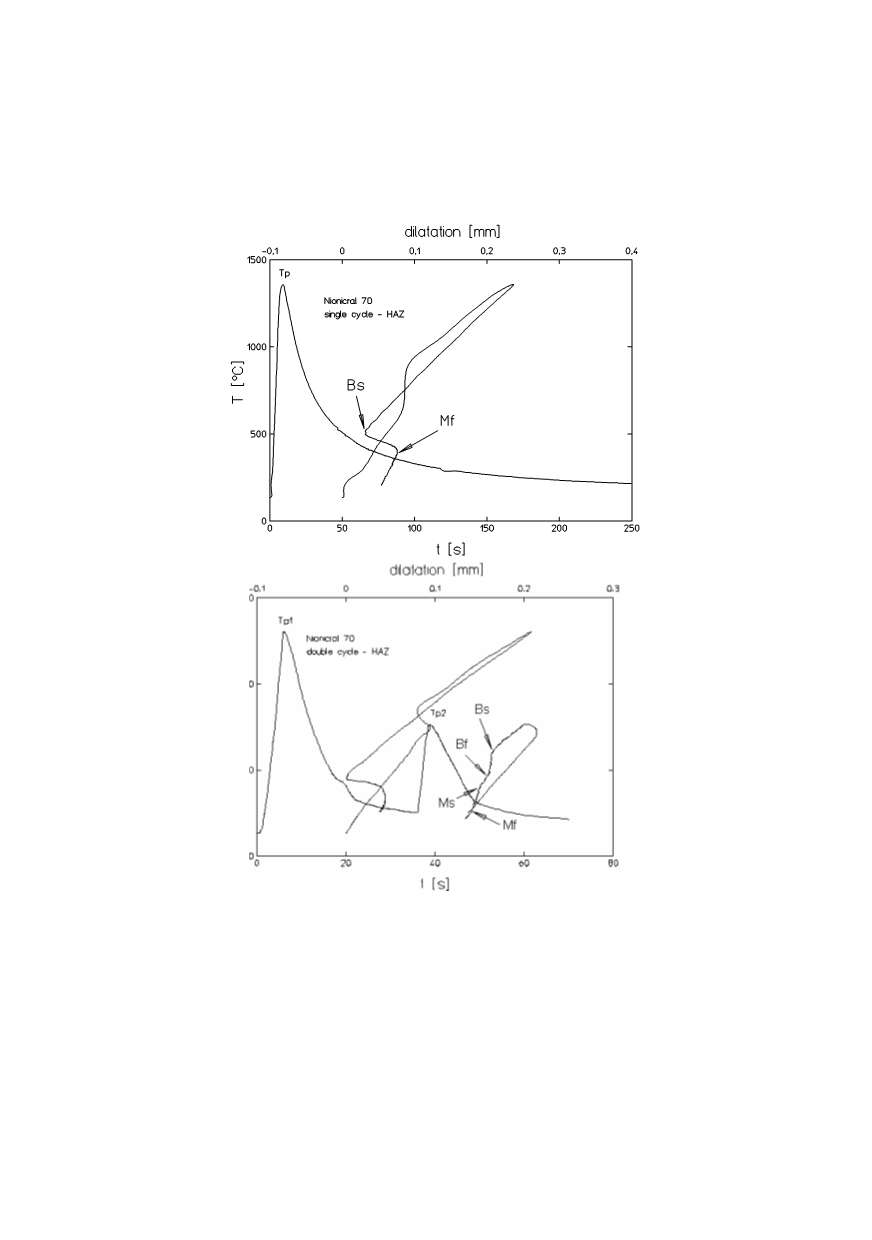
Figure 5. Thermal conditions at fusion line simulated for single-(top)
and double-pass welding (bottom)
For the steel StE 355 Ti, the obtained CCT diagram is different (Fig. 6–right). This
can be attributed to significant differences in chemical compositions of these two steels
and the effect of applied manufacturing technologies.
An example of CCT diagrams for two different zones in double-cycle HAZ at the
fusion line valid under welding conditions is shown in Fig. 7 [13]. In the first thermal
cycle the microstructure of CGHAZ is formed. The applied maximum temperature of the
subsequent thermal cycles exceeded
Ac
3
temperature (
T
p
2
≅
955°C), left diagram in Fig. 7,
and attained temperature range
Ac
1
–
Ac
3
, right diagram in Fig. 7. Cooling corresponds to real
welding. At higher cooling rates, martensitic HAZ will hardly exist if
T
p
2
≅
955°C and
358