


 295 / 392

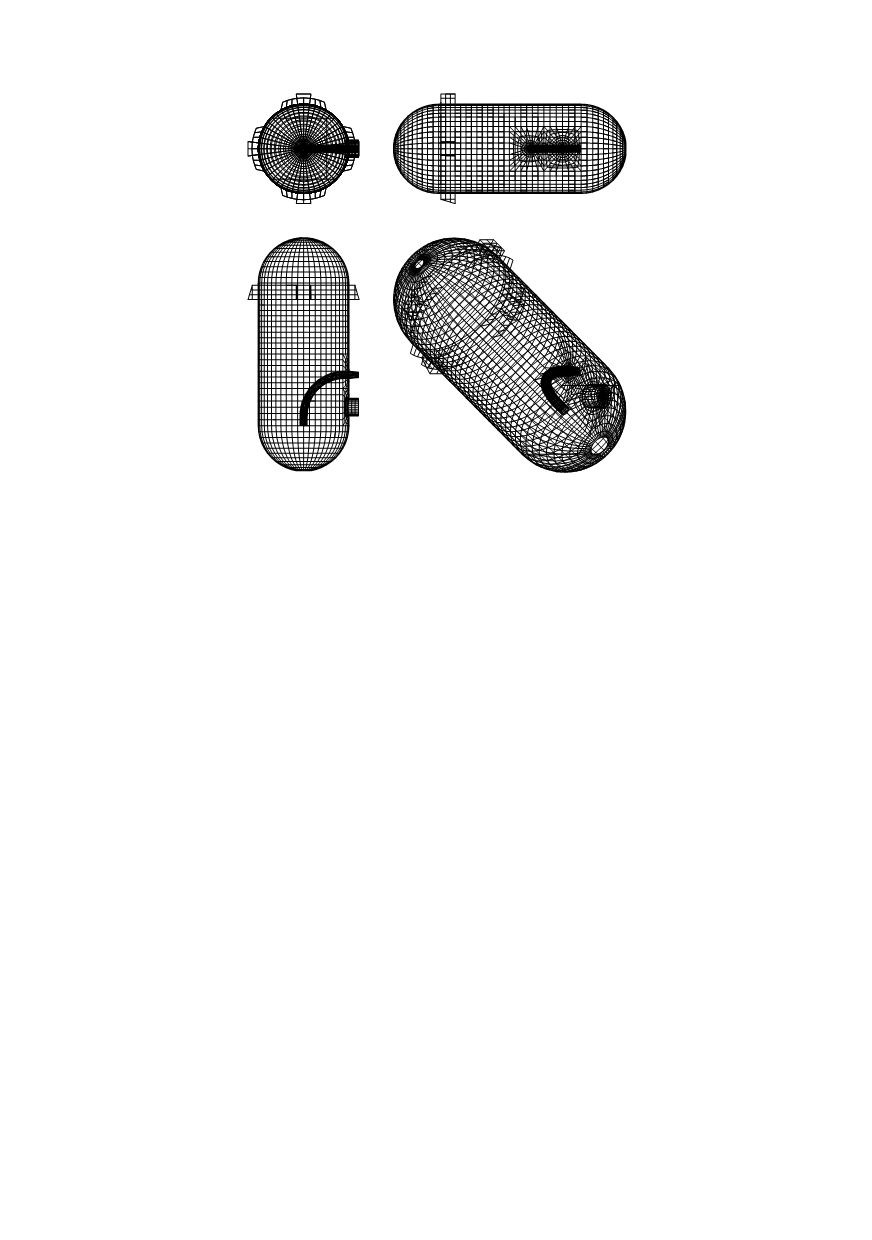
Figure 28. Model for stress analysis of cracked pressure vessel
3.11. Recovery of the rotary furnace
The computation of thermal and mechanical loading of the rotary furnace No. 3 in the
Cement Factory in Beočin had been required for analysis of crack significance, detected
in critical shell part (see Fig. 29).
Maximum stress and stress concentration are found to be around the elliptical hole
(Fig. 30), the stress in the critical zone is very high (30 kN/cm
2
), but only of membrane
type (Table 11) and without stress concentrations. With this data, analysis is performed
for two positions of the cone (old and new) and three shell thicknesses
t
(6, 8, and
2.5 cm), in five variants: model A – cone new position and
t
= 6 cm; model B – cone old
position and
t
= 6 cm; model C – cone new position and
t
= 8 cm; model D – cone old
position and
t
= 8 cm; model E – cone new position and
t
= 2.5 cm.
The analysis showed dominant effects of membrane stress and obtained results are
stated as follows: the new position of the cone decreases stress for 5%; increase of plate
thickness in the critical zone from 6 to 8 cm has decreased the stress for 5%, incorpora-
tion of the new ring in the critical zone is beneficial. When loading is applied to the
whole ring, the maximal stress increases 30%.
The proposed recovery has been accomplished and the furnace was successfully
placed back in service.
3.12. Reconstruction of sleeve at the entrance of limestone–mill “UNIDIAN”
The structure of limestone–mill “UNIDIAN”, Cement Factory in Beočin, consisted of
a cylinder with two sleeves situated at saddle supports, was prone to failure. In order to
eliminate the possibility of failure, the behaviour of the existing solution of the sleeve at
the entrance has to be analysed by modelling the structure and sleeve in one cross-section
(Fig. 31). Weak elements are the sleeve and support, since the existing saddle support
unfavourably affects the sleeve. Welded joints must not be performed on the sleeve cylin-
der because of great bending stress (but if necessary, welding may be performed only in
the longitudinal direction at cylinder ends). Sudden change in stiffness must be reduced
by obtaining the influence when changing the sleeve cylinder thickness.
291